What a view. What a place. On the deck at Sally and Rich Thompson’s house, perched atop a slope just above the village of West Glacier, views stretch across to Apgar Mountain, the Belton Hills, Snyder Ridge and the basin where Lake Mcdonald is.
From here, uou can’t actually see the Middle Fork of the Flathead River — that beautiful ribbon winding its way from the Crown of the Continent along the edge of Glacier National Park towards Flathead Lake. But, in the mornings, Sally says you can see a light layer of mist that gathers above it.
Sally and Rich know the Flathead River intimately. Rich was born in West Glacier in 1948 and spent his entire childhood relishing in the Middle Fork. Sally got hooked a while later, as a young adult enthralled in the gonzo early days of river rafting on the Flathead, and she went on to run a business and raise her family here.
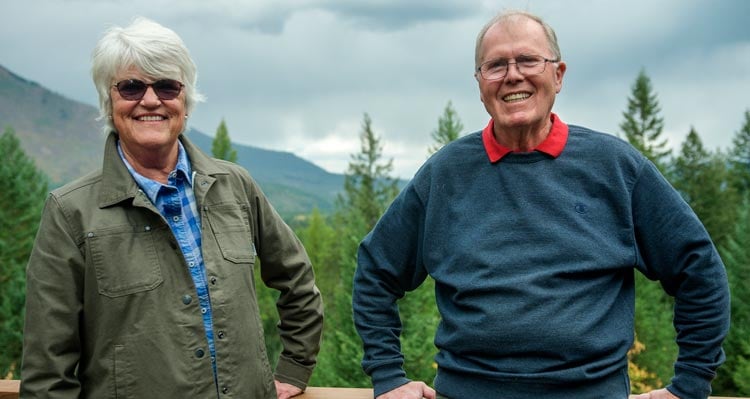
Today, they’re retired with a deep passion for advocating on behalf of the Flathead River — and for sharing its stories.
Their home, decorated with a slew of archives about the river — old photos, VHS tapes, a gorgeous oil painting of the upper reaches of the Middle Fork and a historic and giant map of the drainage — really celebrates this place. The Thompsons are an example of people connected to the world around them. And what a place!
The Middle Fork is one of three tributaries that form the Flathead River. Its source is high in the glacial streams of the Bob Marshall Wilderness, which is attached to Glacier National Park.
This is a river that moves people because of its wildness. Since it was officially protected under the Wild and Scenic Rivers Act 50 years ago, it's become one of the hallmarks in the US for a clean, clear and untamed river.
And that's worth celebrating.
While the Flathead officially became a Wild and Scenic River in 1976, its history with the legislation dates back even further.
Wildlife biologists Frank and John Craighead helped spearhead the federal initiative in the 1950s and ‘60s, after a dam proposal at Spruce Park threatened the Flathead River’s free-flowing nature.
Regional concern evolved into a nationwide solution. For over a decade, the Craighead brothers advocated for legislation to preserve the United States’ most spectacular free-flowing river systems.
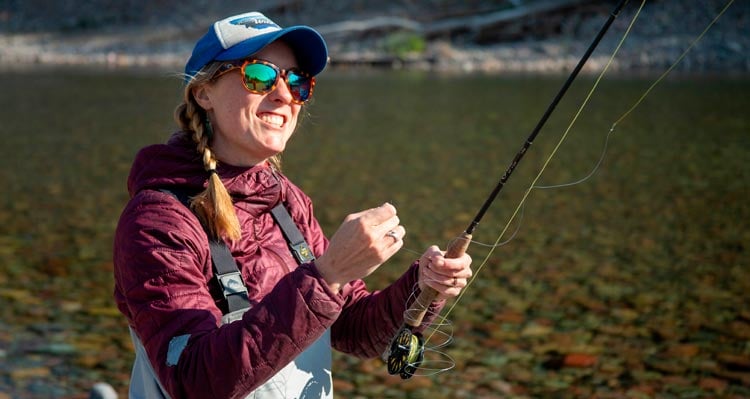
"We had the Wilderness Act but that didn't necessarily protect the rivers that flow through wilderness," says Kascie Herron, associate director for American Rivers. The idea was that a wilderness that didn't protect its watersheds was not fully protected. For recreation as well as education and conservation, river protection was key.
The Craighead brothers' hard work paid off when President Lyndon B. Johnson signed the Wild and Scenic Rivers Act into Law on October 2, 1968. Eight years later, the Flathead River earned protection through the legislation it helped inspire.
It's because of this designation that the Middle Fork of the Flathead River looks so similar to how it did during Rich Thompson's youth. He'd take his bike down to the iconic "Old Belton Bridge" in West Glacier for some fishing with his buddies. With his dad, he'd hike up the drainages. As a teenager, they'd descend the Middle Fork on rubber rafts.
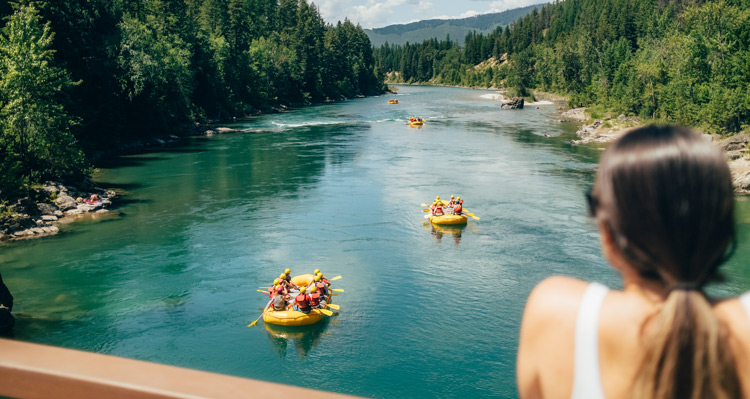
"It's wild, and it's been a wild river for a long time," he says. "It really does look very much like it was in my growing-up years."
See the beauty of this river and the impact it has on the local community in the short film above, produced for the Wild and Scenic River’s 50th anniversary in 2018.

We are building a team of passionate people determined to make a difference in the places we love. Every effort counts. Meet more of them here and discover how Promise to Place is the real deal.
Learn More


"If we can help show every guest who comes here how valuable this river is, how important clean rivers are, we all win in the long run."